Custom software for SMBs tailored to your business
Custom software is software built around your processes instead of the other way round. Here you read when custom is the smart choice and when a package wins, what it realistically costs and how to avoid being stuck with one developer. Written independently.
- No development hours · No commissions
- 100% ownership of your code
- Reply within 1 business day
Software that adapts to your process, not the other way round
Custom software is built around your processes, data and exceptions: a customer portal that follows your workflow, a planning tool for your specific production, an integration that makes two systems talk. The opposite of a standard package, where you adapt your operation to what the software can do.
The question is never custom or package in general, but per process: standard where you are like everyone else, custom where you make the difference.
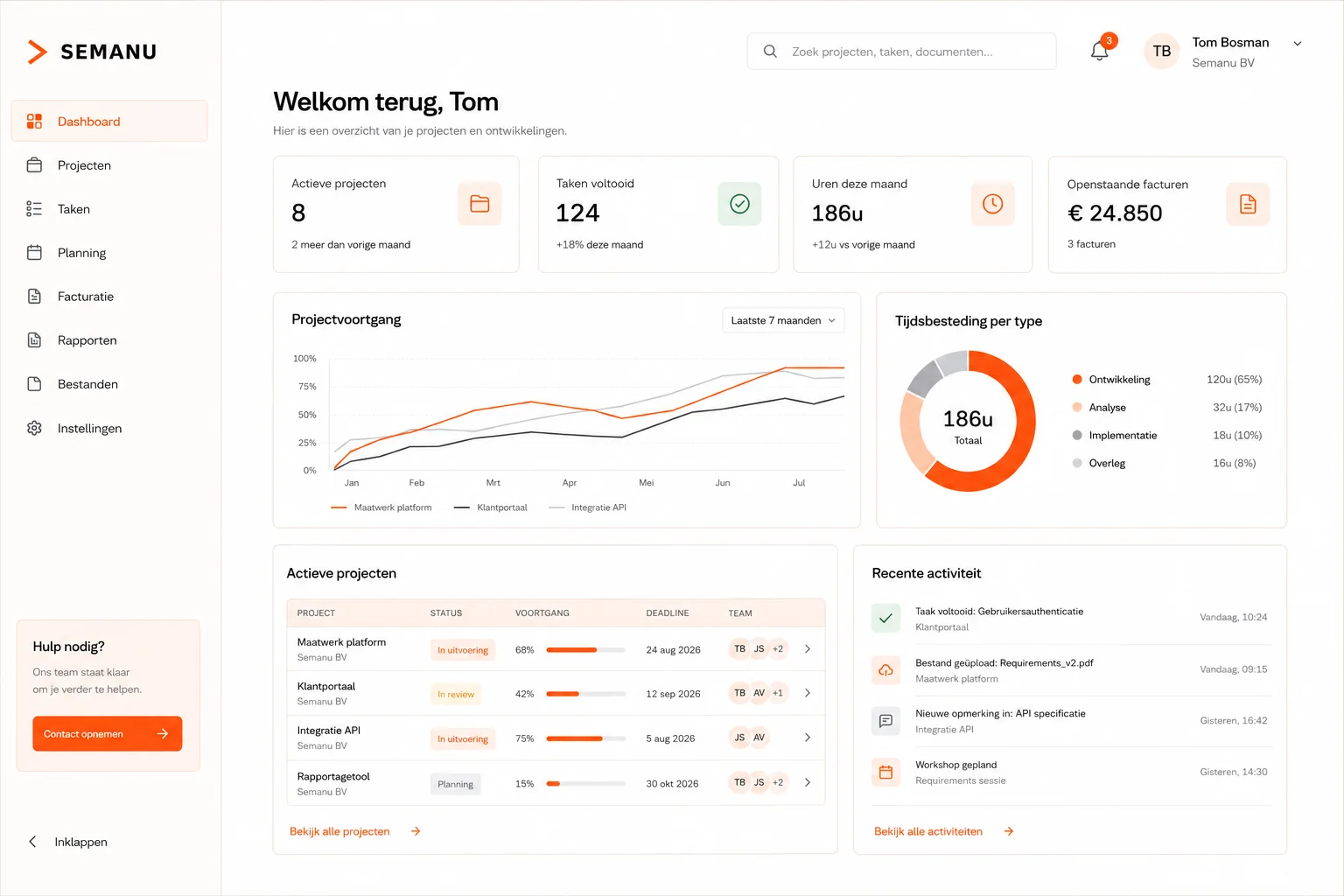
Custom or standard package
Choose a standard package when
- → your process is common: accounting, payroll, standard CRM.
- → you want to go live fast with proven functionality.
- → maintenance and updates may sit with the vendor.
Choose custom when
- ✓ your process is your competitive edge and nowhere for sale.
- ✓ packages only fit with expensive bends and workarounds.
- ✓ you have to connect systems that do not know each other.
In practice the answer is usually hybrid: a package as the backbone, custom software in the places where you make the difference.
Does the core of your organisation run on a complicated Excel sheet only one employee truly understands? That is the signal for a robust custom application.
More expensive at the start, cheaper in the long run
Custom software asks more budget upfront than licences, but you pay no per-user monthly licences and the software grows with you instead of limiting you. The real comparison is the total cost over five years, including the workarounds and bends an ill-fitting package costs you every week. And crucially: agree that the code is yours, so your investment becomes an asset instead of a subscription.
Where custom projects derail
Building without a specification
Build on half an idea and you pay for the analysis anyway, but in extra work and discussions afterwards.
Dependent on one developer
Without documentation, code ownership and transferability you are stuck with whoever built it. That is why we also safeguard the technology: common and mainstream, such as Python, Node.js, .NET or React, never exotic or outdated frameworks. Exit agreements are made on day one.
Scope creep
Every good idea during the build looks small and together they slow the project by months. Changes go through a change process, not through the side door.
From idea to working software
SEMANU specifies and safeguards, a development partner builds. That keeps the advice independent from whoever builds.
What comes out is not a black box but a system you know: specified on paper, built in mainstream technology and delivered with documentation and your name on the code.
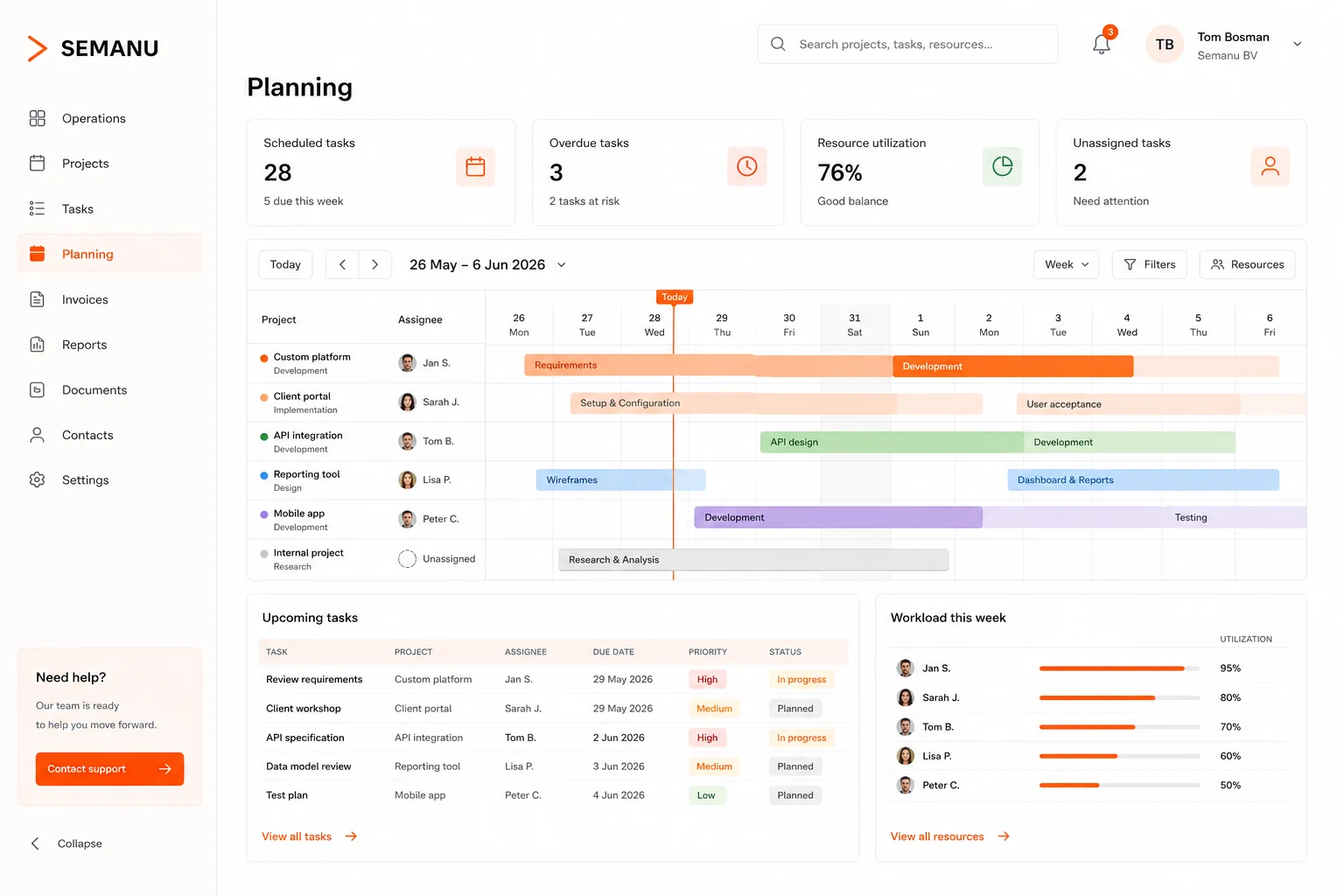
Where we make the difference
- Scope and specification document for RFP
- Functional and non-functional requirements
- User stories with acceptance criteria
- Integration map with existing systems
- Vendor briefing for development partners
- Independent guidance during the build phase
Frequently asked questions about custom software
What is custom software?
Software built specifically for your company, around your processes and data, instead of a standard package you adapt your operation to. Think customer portals, planning tools or integrations between systems. Usually combined with packages for the common processes.
What does having custom software built cost?
More upfront than a package, but without monthly per-user licences and without the hidden cost of workarounds. Compare on the total cost over five years, not on the first quote. Ask for an indication in the scope call.
Custom or standard package: how do I choose?
Per process, not for your whole company at once. Standard where you work like everyone else, custom where your way of working is your edge. The analysis makes that cut objectively.
How long does building custom software take?
Count on three to nine months from analysis to delivery, depending on scope and integrations. A sharp specification upfront is the biggest accelerator and the best protection against extra work.
Who owns the code?
That belongs in the contract: you. Together with documentation and transferability, that is your insurance against depending on one developer. We fix it before the build starts.
How do I avoid being stuck with my developer?
Ownership of the code, up-to-date documentation, mainstream technology and an exit clause in the contract. Arrange that on day one and you can always switch; postpone it and you negotiate from behind.
What happens if the build partner stops or goes bankrupt halfway?
With our approach the full specification and architecture are on paper upfront, the code is your property from day one and the repository sits under your control. If a partner drops out, another developer can take over without starting from zero.
Does SEMANU also maintain the software?
No, we neither build nor maintain: your development partner does. We make sure maintenance, SLAs and documentation are properly arranged from the contract on, and we stay available for periodic reviews.
You might also be interested in this
SEMANU is an independent software advisory firm for SMBs: we sell no software and receive no vendor commissions. Read how we work as an independent software advisory firm.