ERP software for SMBs: understand, budget and choose right
An ERP system brings your core processes together in one database. Here you read how that works, what it realistically costs and how to choose a system that fits your processes. Written independently: we sell no software.
- No vendor lock-in · No commissions
- Mutual NDA before every conversation
- Reply within 1 business day
One database for your entire company
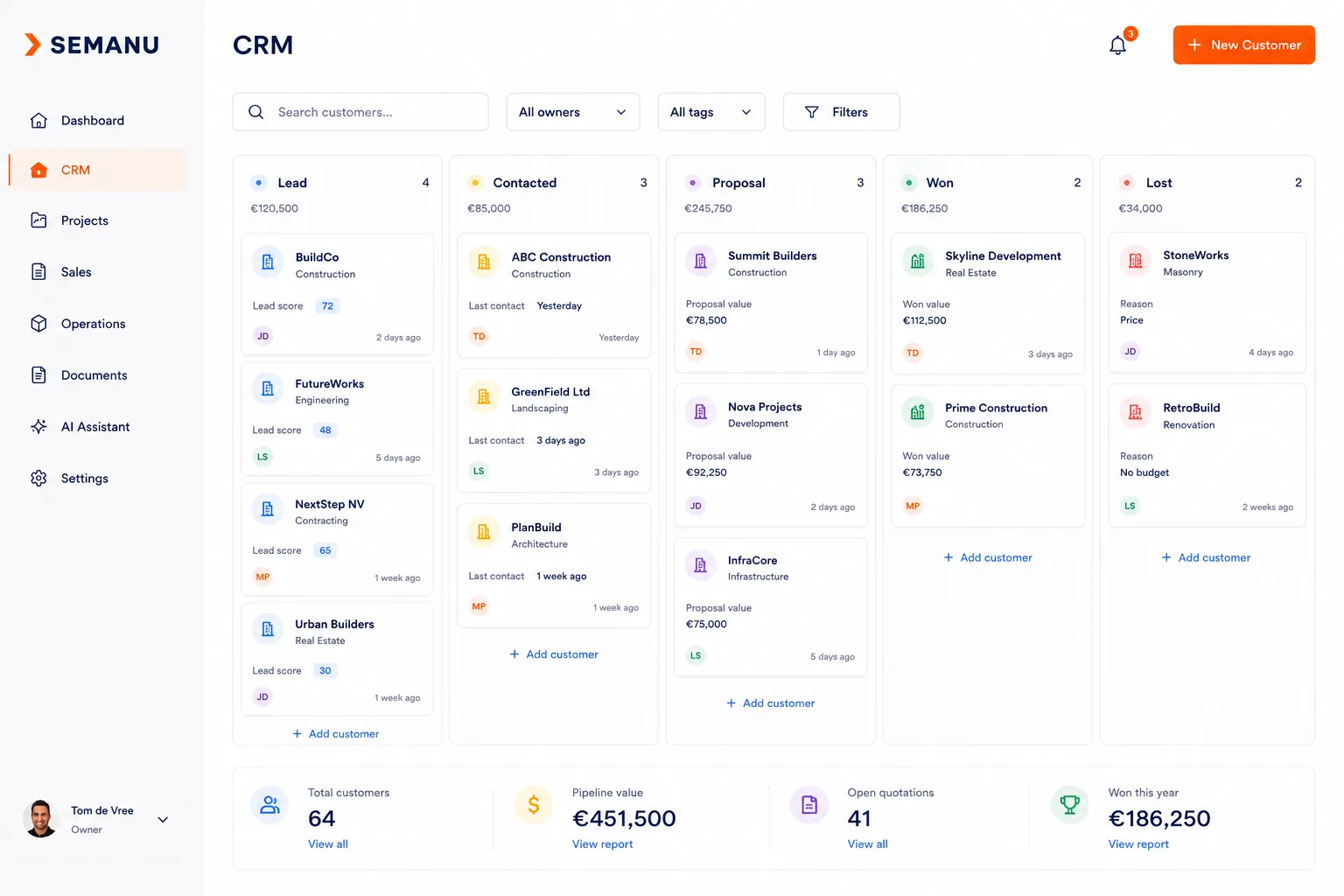
An ERP system (Enterprise Resource Planning) brings core processes such as sales, inventory, production, purchasing and accounting together in one database. Every department works on the same data, so double entry and conflicting figures disappear. An order flows automatically through to planning, warehouse and invoicing.
For an SMB, ERP is not an IT project but a business project: it touches every department and every process. That is why a good project starts not with the software but with your own operation.
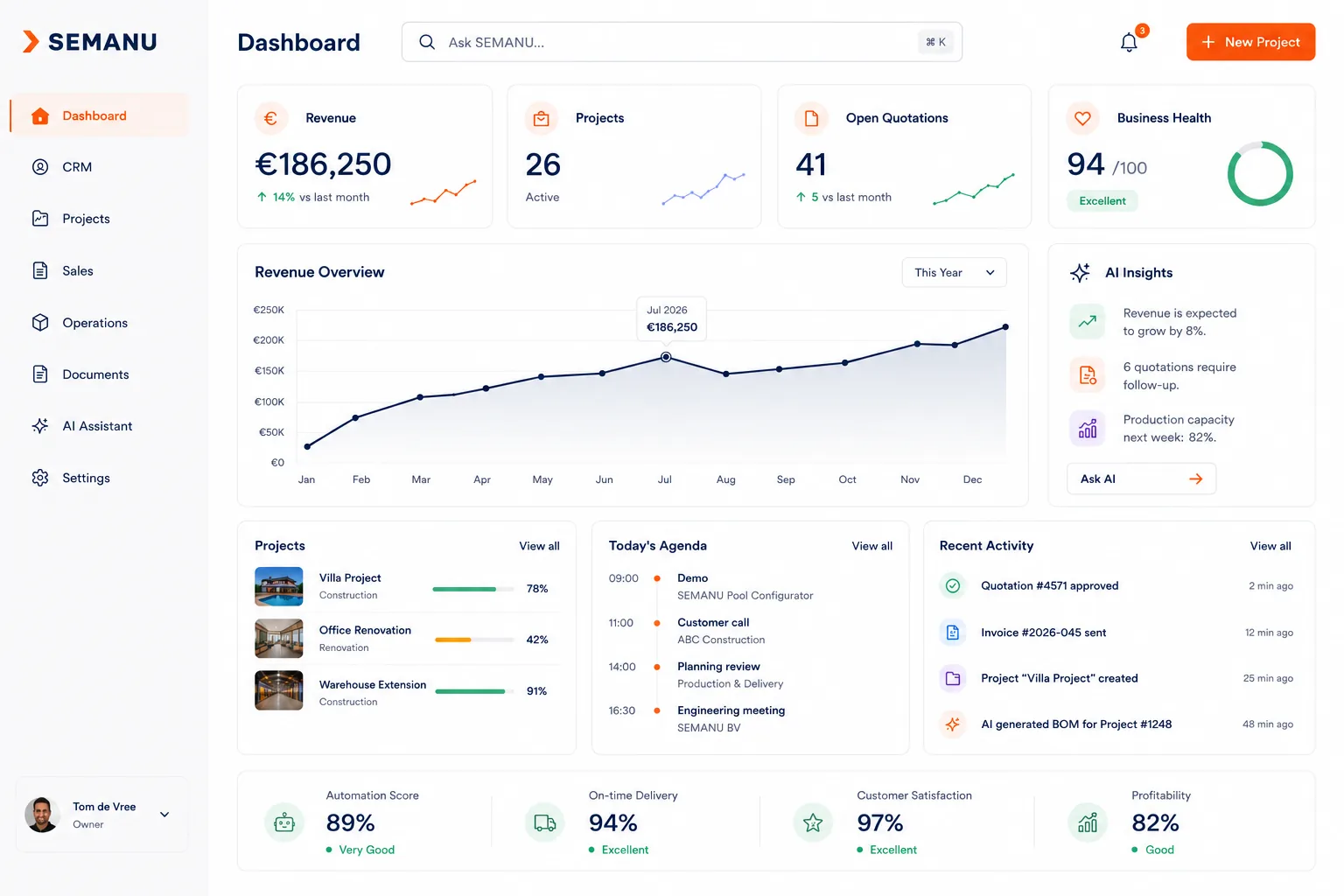
How an ERP system works
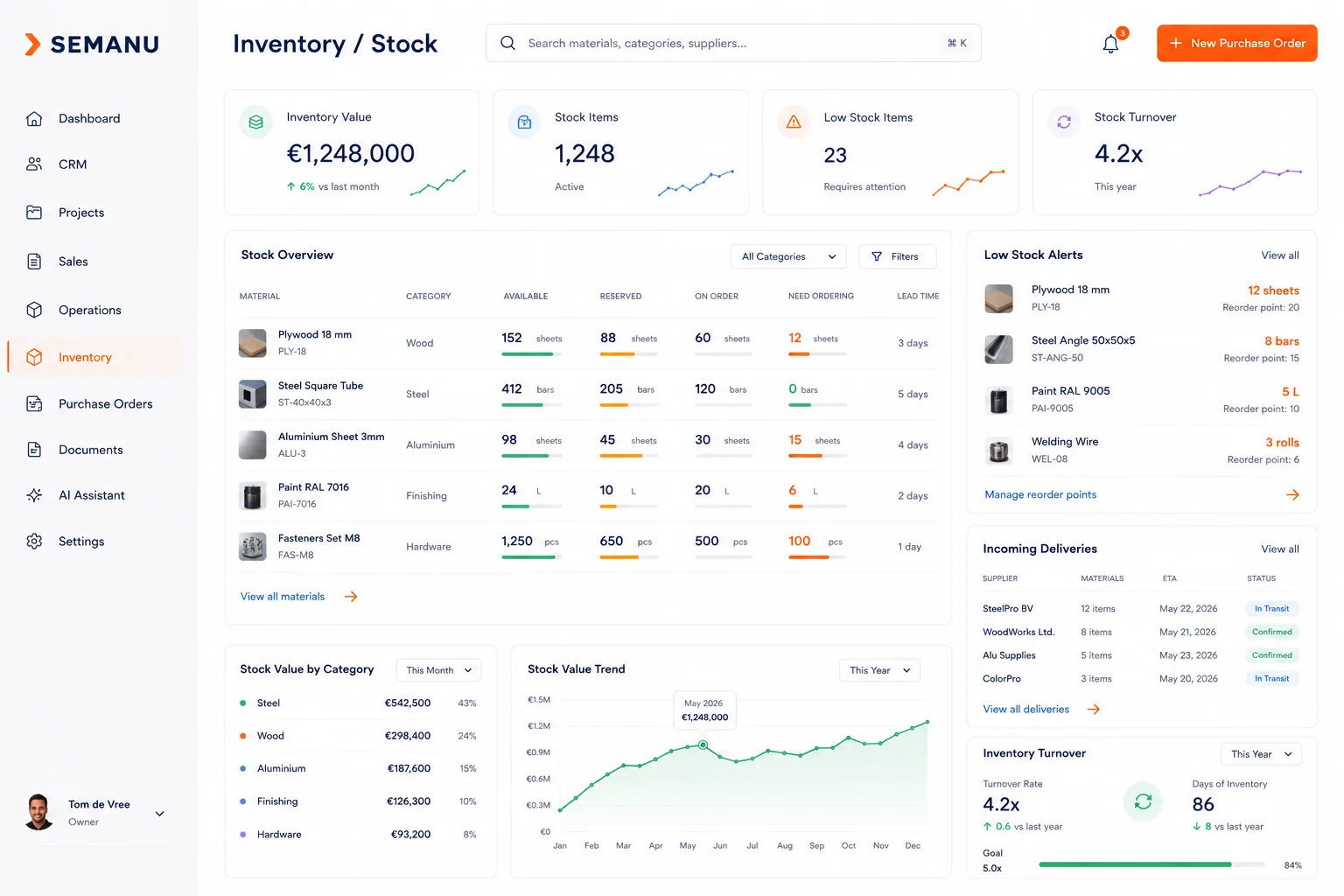
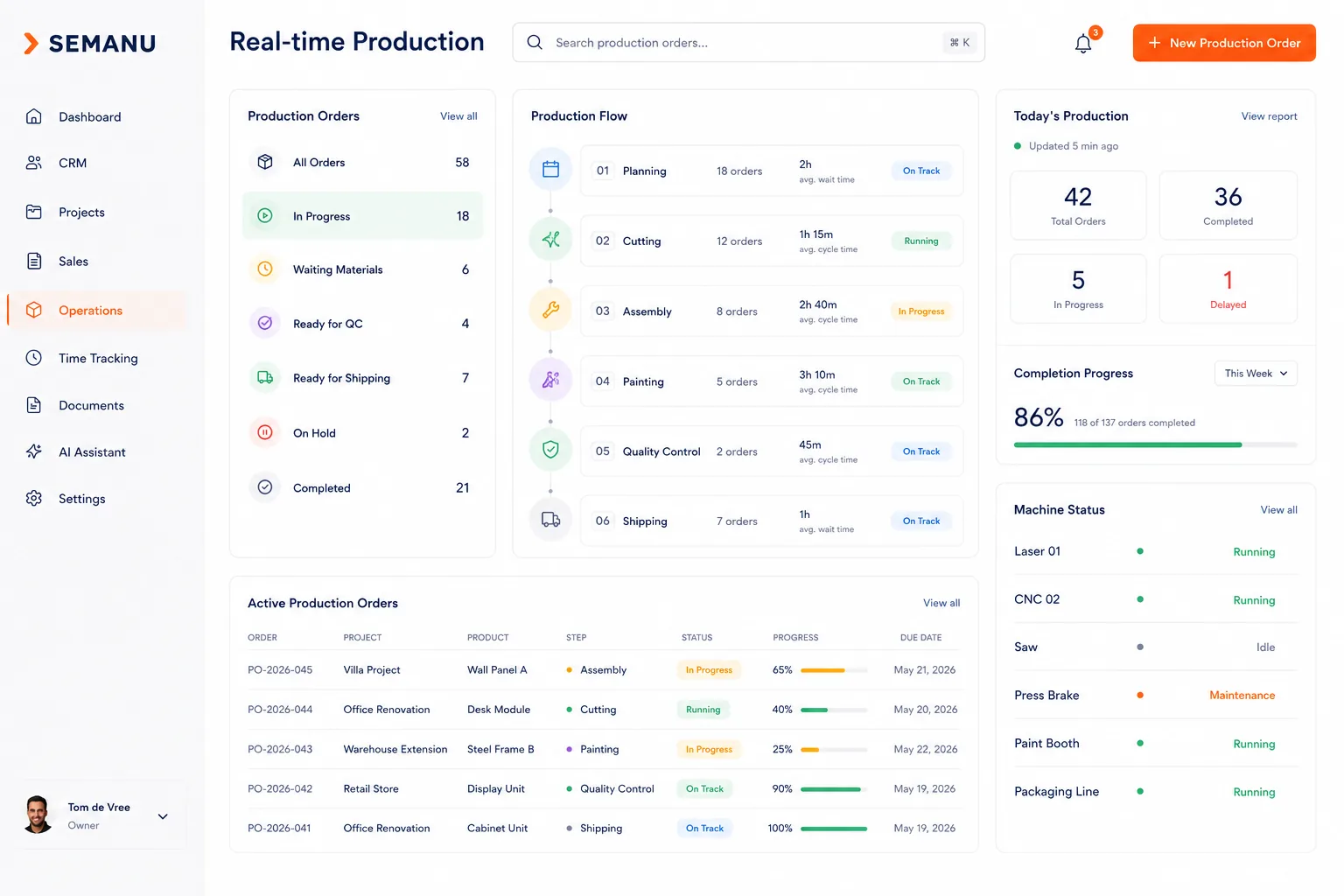
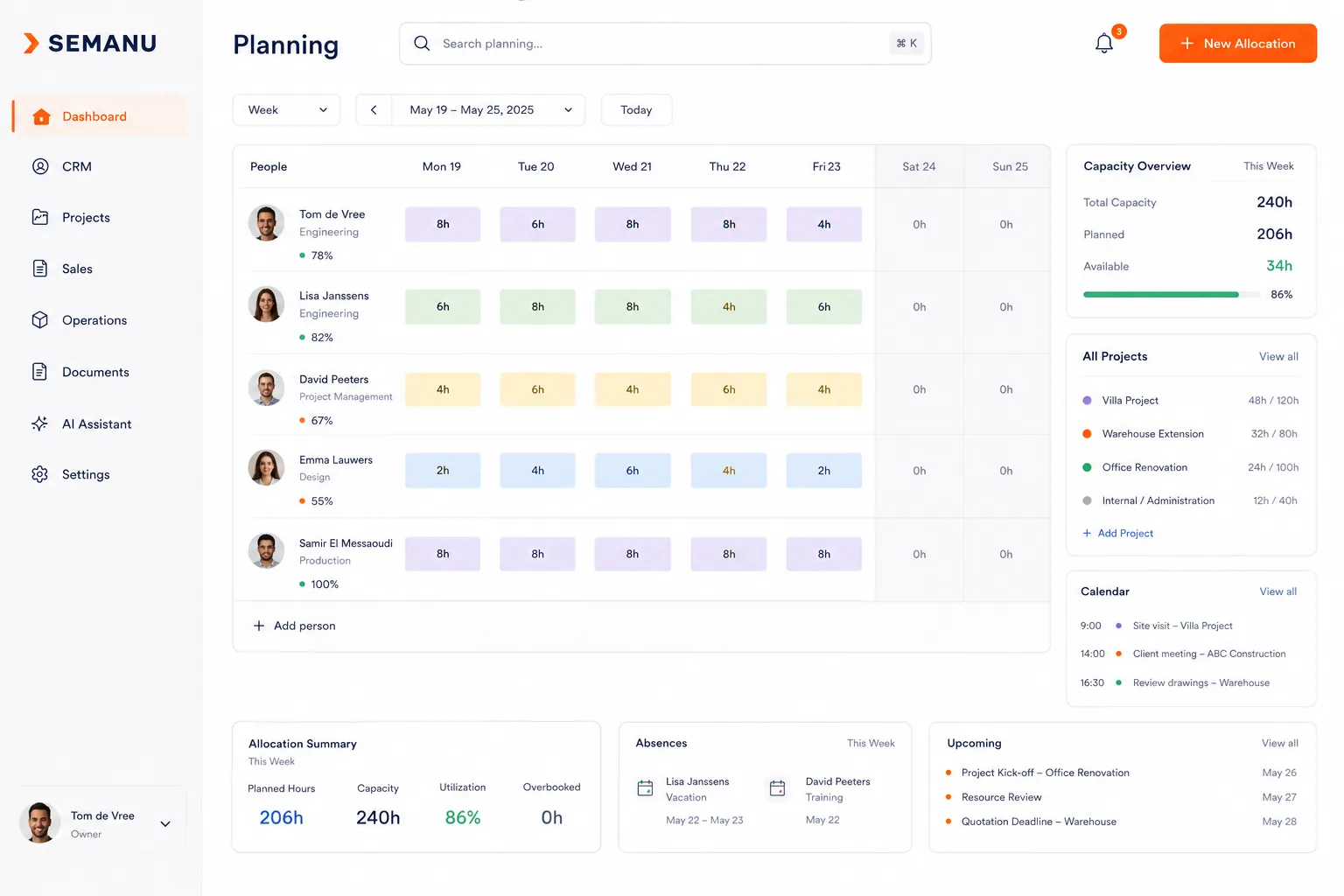
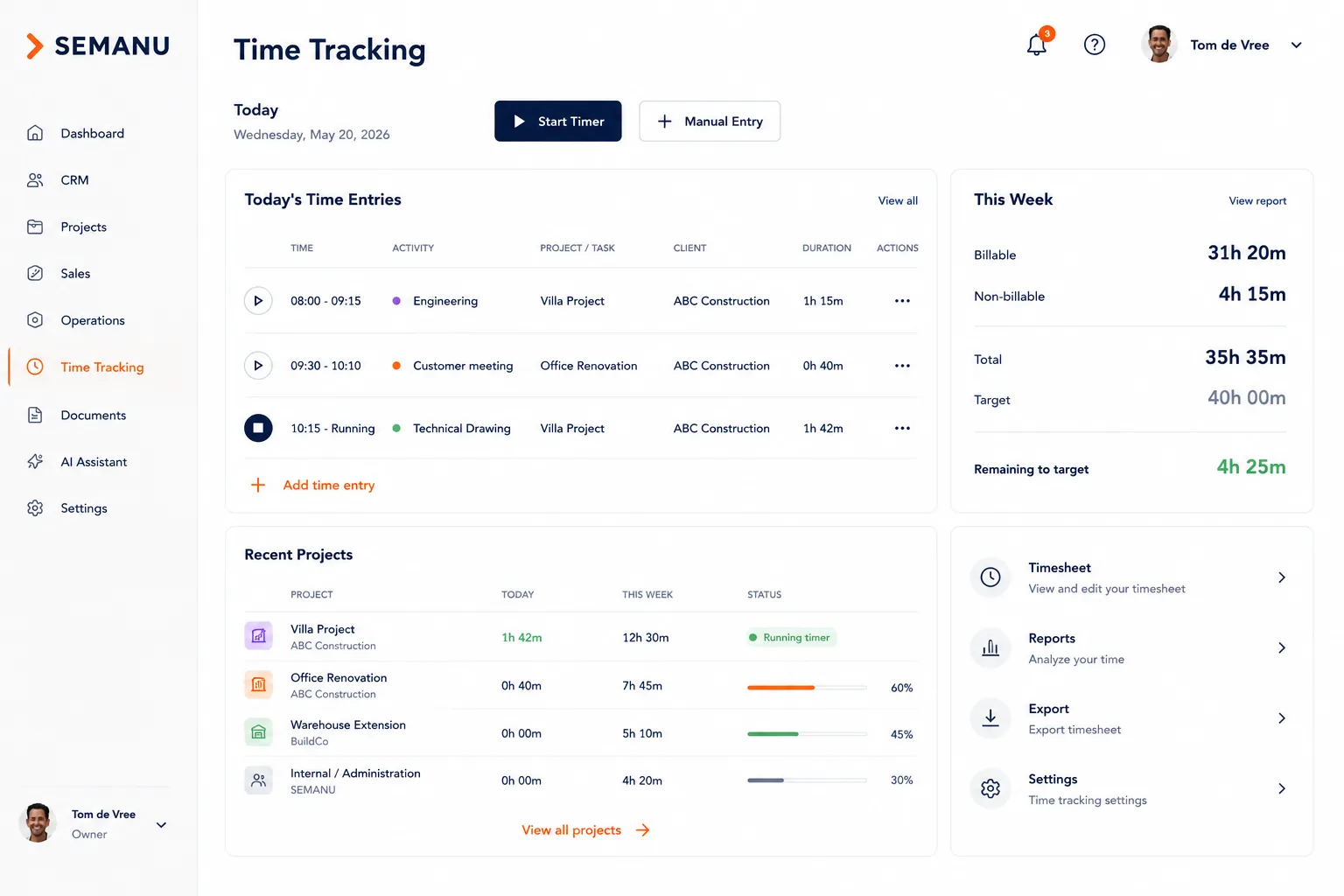
The power is not in the individual modules but in the integration. When sales enters an order, the warehouse knows what has to leave, purchasing orders what is missing and the invoice is ready as soon as delivery happens. Modern systems connect through APIs to your webshop, machines or configurator, and run in the cloud or on your own servers.
What an ERP system costs
| Company size | Licences per user per month | Implementation (one-off) | Total over 5 years |
|---|---|---|---|
| ±10 employees | 50 to 150 euros | 15,000 to 50,000 euros | 80,000 to 180,000 euros |
| ±25 employees | 80 to 200 euros | 50,000 to 150,000 euros | 250,000 to 600,000 euros |
Licences are only part of the story: implementation costs, data migration and internal hours weigh at least as heavily. The biggest cost nobody budgets is internal time: the hours your own people put into the project. The full breakdown is in our blog on ERP pricing and the 5-year TCO analysis.
From analysis to go-live: six months to a year and a half
The number of processes, integrations and the availability of your own team set the pace. A sharp specification upfront is the biggest accelerator: vendors quote against the same document and discussions afterwards disappear. The biggest delays come from underestimated data migration and integrations that only surface during the project.
There is no best ERP, only a best fit
The right choice depends on your sector, processes and growth plans. Compare systems on process fit with weighted criteria instead of demo impressions: a demo shows what runs smoothly, your exceptions determine what gets stuck. Have vendors quote against the same specification, otherwise you are comparing apples with pears.
That is how our ERP selection approaches it, with the free ERP check as the first step.
The three classic pitfalls
Integrations underestimated
The link with your webshop, machines or that one legacy system the planning runs on. Map them before the selection.
Data migration underestimated
Migrating polluted master data is a project in itself. Treat it as a side issue and your go-live slips by months.
Internal hours underestimated
Your best people are partly occupied for months. Fail to make room for that and you pay double in delays.
These are the most common mistakes in an ERP implementation. More on this in our blog on the five integration mistakes in ERP projects.
Independent, on your side of the table
SEMANU sells no ERP software and receives no commissions. We guide the journey in three steps: the business analysis defines what your company needs, the vendor selection makes vendors objectively comparable and the project oversight safeguards that what was agreed gets delivered. We do this from Belgium, for companies across the Benelux and the DACH region.
Frequently asked questions about ERP software
How does an ERP system work?
An ERP system brings core processes such as sales, inventory, production and accounting together in one database. Every department works on the same data, so double entry and conflicting figures disappear. An order flows automatically through to planning, warehouse and invoicing.
How much does an ERP system cost?
For an SMB with about ten employees, count on 80,000 to 180,000 euros in total cost over five years; at 25 employees that rises to 250,000 to 600,000 euros. Licences are only part of it: implementation, data migration and internal hours weigh at least as heavily. Our blog on ERP pricing breaks down the full picture.
How long does it take to implement an ERP system?
For an SMB the timeline typically runs from six months to a year and a half, from first analysis to go-live. The number of processes, integrations and the availability of your own team set the pace. A sharp specification upfront is the biggest accelerator: everyone works towards the same document.
Which ERP system should I choose?
There is no best ERP for everyone: the right choice depends on your sector, processes and growth plans. Compare systems on process fit with weighted criteria instead of demo impressions. Our approach: first define what your company needs, then invite vendors.
How do you integrate an ERP system with existing software?
Want to have an ERP integrated with your webshop, CRM or machines? Modern systems connect through APIs. Map every integration before the selection, including systems that stay: that is where implementations most often get stuck. Define per integration who builds, tests and maintains it.
What does an ERP consultant do?
An ERP consultant translates your business processes into requirements a system must meet and guides the selection and implementation. An independent consultant sells no software and therefore has no stake in a specific system. The advice starts from your processes instead of a product demo.
You might also be interested in this
SEMANU is an independent software advisory firm for SMBs: we sell no software and receive no vendor commissions. Read how we work as an independent software advisory firm.